


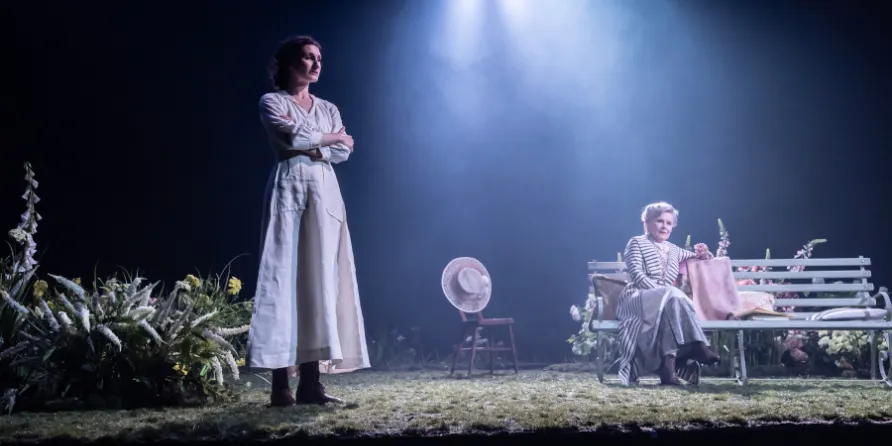
What It’s Really Like for Bessie Carter to Work With Her Mum, Imelda Staunton
Lyn Gardner Talks to Bessie Carter About Mrs Warren’s Profession and More

On the first day of rehearsals for Mrs Warren’s Profession, Bessie Carter was nervous, wondering what it would be like to work with Imelda Staunton. Who can blame her? Carter may be a rising star, making her mark as the doomed-to-be-disappointed Fenny in Dear Octopus at the National in 2024 and described by the Observer as “the human equivalent of a rose needing rescuing”, familiar to millions as Prudence Featherington in Bridgerton, and currently starring on TV as Nancy Mitford in Outrageous. But Staunton is a grand dame of British theatre and the possessor of five Olivier Awards, the latest for Hello Dolly! On stage, Staunton and Carter play mother and daughter—the eponymous Mrs Warren and her daughter, Vivie—but offstage they are mother and daughter too.
“I did have a moment of wondering, ‘What will this be like?’” recalls Carter. “I had never seen her in the rehearsal room, and she had never seen me in one, so I did wonder what it would be like, but from the moment we both walked in, it felt natural. It felt like we’d done it before, and it was just two adults turning up to do their job. I never felt I had to turn off being her daughter and turn on being the actor she works with, so it was pretty magical. We could call each other up late at night to discuss how we should do bits of it.” She adds that now the show is running, “It is just lovely to be able to see each other every day.”
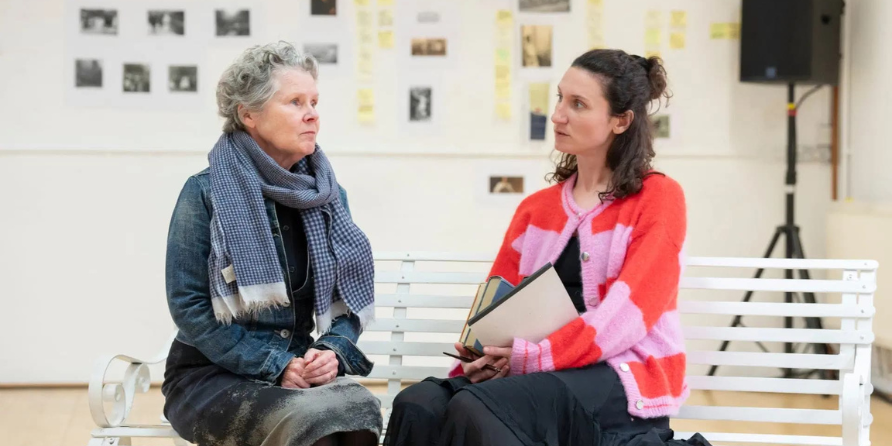 Imelda Staunton and Bessie Carter in the rehearsal room for Mrs Warren's Profession. Photo by Johan Persson.
Clearly Carter and Staunton have a much closer, more loving and less fraught relationship than that of Vivie and Mrs Warren in Shaw’s 1893 play, which was considered a scandal in its day and banned for 30 years. Relocated to 1910 in Dominic Cooke’s revival, Vivie is a well-educated, clever and financially privileged young woman who discovers during the course of the play that her mother made her money from prostitution. Will she be shocked or understanding? Will it bring mother and daughter closer together or drive them apart?
“Like the audience, Vivie is discovering things through the course of the play. She has a really rude awakening. She is really intelligent, but like a lot of 20-year-olds straight out of university, she is naïve. So she goes on a real journey, and there is a standoff between her and her mother, who are related by blood but separated by class and financial circumstances. It is a play which is asking us all what we would do in Mrs Warren’s shoes. We may think we know, but maybe you have to wait to decide until you have walked a mile in those shoes.”
Carter argues that Cooke’s sleek production, which cuts the play to under two hours, plays out “like a really good thriller” and that when she is on stage, she can feel the audience “leaning into the arguments. I can really feel it on stage. They want to pay attention because to have two women on stage discussing difficult things which are still taboo about sex work, equal rights and opportunities is thrilling, and the fact that a play which was written 130 years ago can do that is the sign of a good play.”
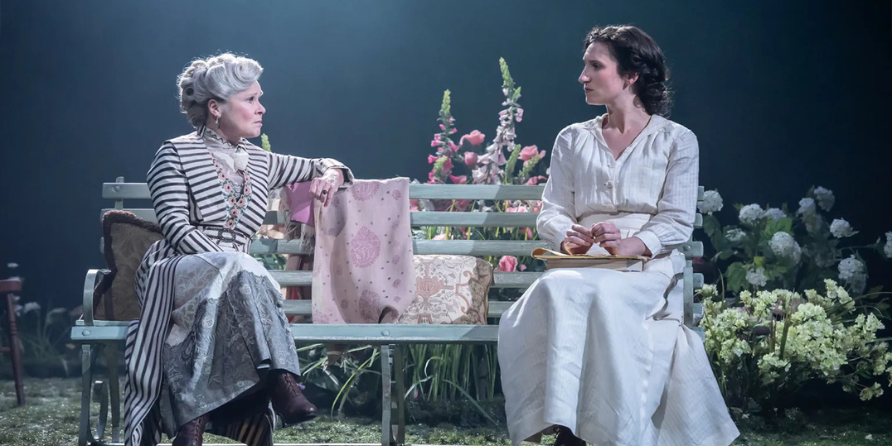 Imelda Staunton and Bessie Carter in Mrs Warren's Profession. Photo by Johan Persson.
Carter says that a sex worker came into rehearsals to talk to the cast, and after she returned to see the play, her comment was, “What’s changed?” It’s a good response. The enduring strength of Shaw’s play is the way it pinpoints the financial exploitation of women which drives them to prostitution and exposes the male commercial profiteers who use prostitution for their private gain.
“It’s just so relevant,” says Carter, pointing to the growing “wealth divide in the UK. The play talks about money, and for some reason we don’t want to talk about money. But we have to, because people, particularly women, are suffering because government policies and the cost-of-living crisis are making living unaffordable. We simply don’t want to talk about the fact that some people have too much money and many don’t have enough and are suffering because of it.”
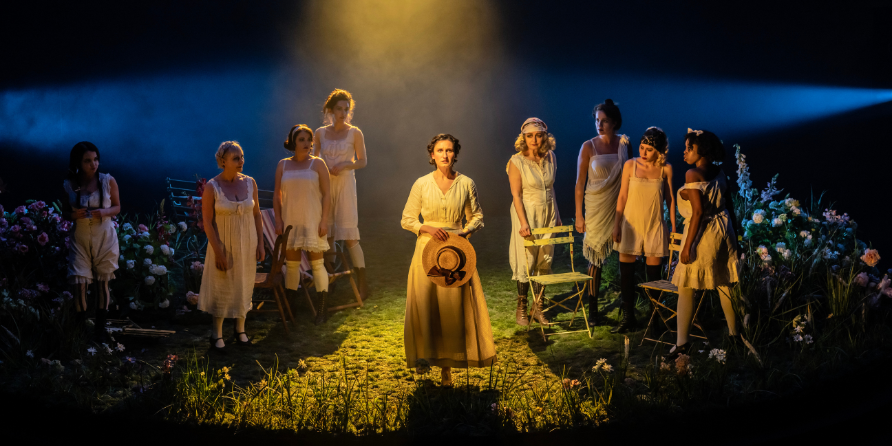 Bessie Carter and the ensemble in Mrs Warren's Profession. Photo by Johan Persson.
But the production almost didn’t happen because when Cooke—a long-time collaborator with Staunton—suggested the play, Staunton was adamant she didn’t want to do ‘that old thing” which she had performed in rep, playing Vivie. It was only when Cooke persuaded her to read it again that she saw its potential. It was Cooke who suggested that Carter would be perfect to play Vivie. Mother and daughter had talked about working together the previous year, so it felt like perfect timing.
Carter rather envies the fact that when her mum was starting out, the repertory system was still in place in which actors went to local theatres across the country and learnt their craft by playing one role in the evening while rehearsing another play during the day.
“She did six years in rep, and she played so many roles, from St Joan to Juliet. She got so much practice, and she got to play these big parts. But it is very different now for my generation. But the flip side is my mum didn’t do TV for years, whereas I started doing telly my first year out of Guildhall. I feel really lucky, and the dream is to keep on doing both because they are very different beasts, but they both tell truths in their own way.”
Cover photo from Mrs Warren's Profession, playing at the Garrick Theatre until Sat 16 Aug. Book your tickets now on our website or app.


