


Lyn Gardner Revisits Othello’s Legacy
As David Harewood returns to Othello, Lyn looks back at the actors—and shifting attitudes—that have shaped the role on the British stage

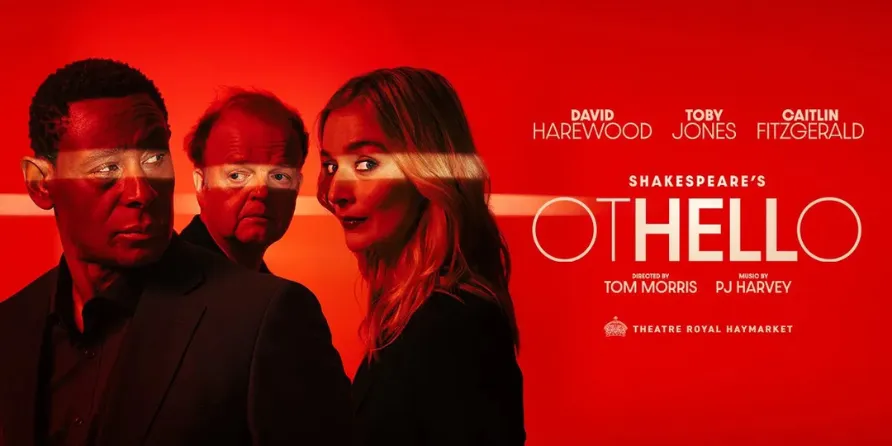
When David Harewood plays Othello at the Theatre Royal Haymarket in October—a genuine theatre event which also features Toby Jones as Iago and Caitlin Fitzgerald as Desdemona—he will be returning to a part he has already played with notable success. He was only 32 the first time around, young to play a role that has often been the province of older actors. Olivier was 57 when he played the part. Harewood is now 59. The casting of Caitlin Fitzgerald, who is 41, neatly side-steps the fact that audiences would find a mature Othello and a very young Desdemona—who would have been played by a teenage boy in Shakespeare’s time—weird and icky.
It is hard to imagine now, but when Harewood played Othello in Sam Mendes’ revival at the National Theatre in 1997 with Simon Russell Beale as Iago, he was the first black actor to play the role on the South Bank. Harewood has said, “Last time around I was very conscious of breaking through a particular glass ceiling, and I probably felt the weight of that.”
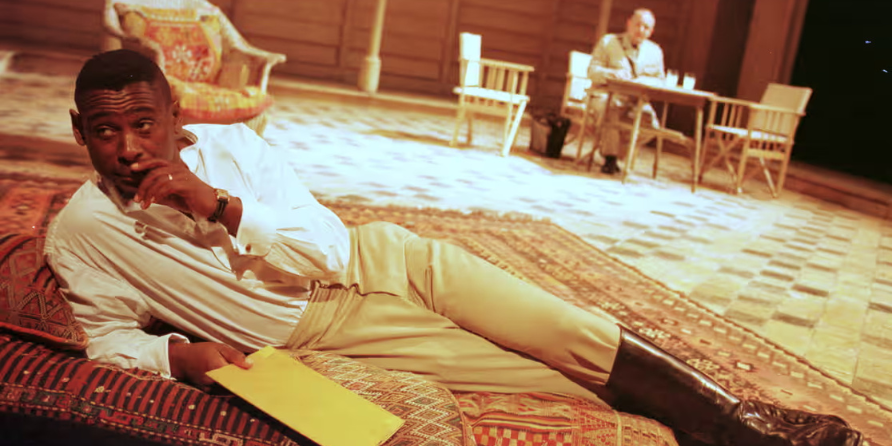 David Harewood as Othello, with Simon Russell Beale as Iago, at the National Theatre in 1997. Photo by Tristram Kenton.
He has since been followed on the National stages by Adrian Lester (who was a year below him at RADA) in 2013 with Rory Kinnear as his Iago in a contemporary version directed by Nicolas Hytner. Giles Terera was in Othello in 2022 opposite Paul Hilton in a production by Clint Dyer. In this revival Harewood and Jones will be directed in a contemporary take on Shakespeare’s tragedy by Tom Morris, the former artistic director of Bristol Old Vic who was the co-director of the mega-hit War Horse.
But while Harewood was the first at the NT, he was not the first black actor to play the role on the British stage. That honour belongs to African-American actor Ira Aldridge, who played Othello at Covent Garden in 1826. He had already toured the UK in the role. The great American actor, Paul Robeson, had a famous success more than a century later as Othello at the Savoy in 1930 with Peggy Ashcroft as his Desdemona. The pair also had an off-stage affair during the run. Robeson reprised the role at Stratford in 1959.
The last white actor to play the role at the National Theatre was Paul Scofield in 1980 (Michael Bryant was Iago and Felicity Kendal played Desdemona). It was one of Laurence Olivier’s most prized roles. His blacked-up Othello was a huge hit at the Old Vic in 1963 and was filmed for posterity, a performance which for modern tastes is actorly to the point of caricature but in its time was well regarded. Richard has described it as “a star performance: the triumph of the actor as tyro”. Prior to that at the Old Vic, Richard Burton and John Neville alternated the roles of Othello and Iago in 1956. The critic Kenneth Tynan was not impressed, writing, “The Moor came lame from the struggle, as he must when age is absent.”
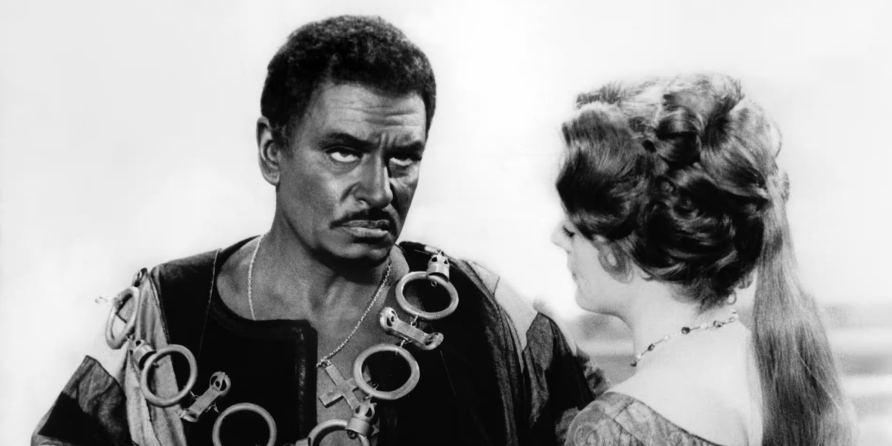 Laurence Olivier as Othello and Maggie Smith as Desdemona in the 1965 film. Photo by Cinetext Bildarchiv/Warner Bros/Allstar.
Scofield and Olivier were following in a long tradition of white actors playing Othello, including Edmund Kean (who Alridge was replacing at Covent Garden) and Garrick and Henry Irving. But by the time Harewood played the part in 1997, the idea that a white actor might take on the part was increasingly frowned upon. At least not without a radical swerve. Patrick Stewart got to play the role at the Shakespeare Theatre in Washington in the 1997/98 season in a production by Jude Kelly in which Stewart was a white Othello and the rest of the cast were Black African Americans. I saw it, and while it was an intriguing concept, it didn’t entirely land.
But perhaps as global majority actors increasingly get their overdue opportunity to play every Shakespeare role, we might see the beginnings of a shift. Last year in an interview in The Guardian Harewood declared: “We’re at this strange point in the profession where people go: "Oh, you can’t play that role because you’re not disabled, or you can’t play that because you’re not really from there.’ The name of the game is acting. Yes, we’ve got to be representative, but I do think we have to be careful … That even extends to Othello in blackface. I say, if you want to black up, have at it, man. It’d better be fucking good, or else you’re going to get laughed off the stage. But knock yourself out! Anybody should be able to do anything.” Many would disagree.
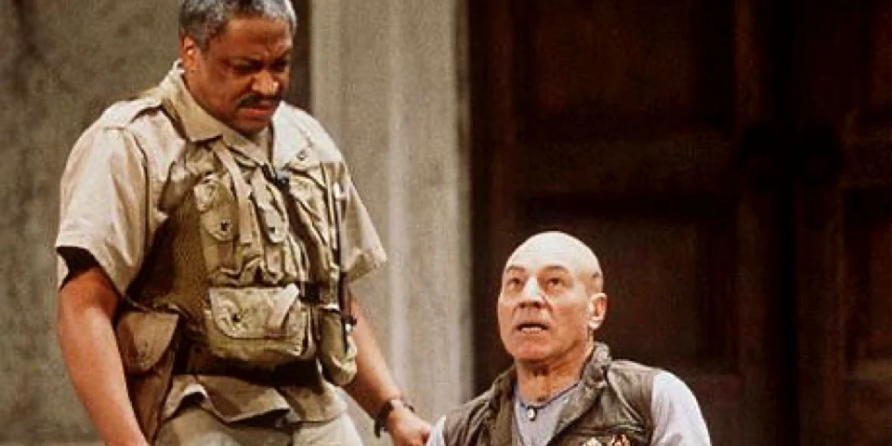 Sir Patrick Stewart stars as Othello in 1997 production. Photo by Carol Rosegg/AP.
But while Harewood is a great stage actor—last seen on stage here in James Graham’s Best of Enemies—and an obvious draw, this is a play in which the devil gets all the best tunes. A great Iago can steal the show from under Othello’s nose. And plenty have. He is one of Shakespeare’s most compelling villains.
Toby Jones may not have huge experience as a classical actor, but I can already imagine the malevolent twinkle in his eye when, in taking his revenge on Othello’s failure to promote him, he makes the audience complicit in his malign mischief-making, unleashing a whirlwind of a catastrophe that swallows everyone up. Himself included.
Cover image: show artwork. Othello is playing at the Theatre Royal Haymarket from Thu 23 Oct 2025 - Sat 17 Jan 2026. Book your tickets on our app or website.


